

Labyrinth: 40 Years On
Jim Henson’s 1986 fairy tale feels refreshingly analogue in the age of CGI

Warning: Contains spoilers
This summer, Christopher Nolan’s take on The Odyssey will apparently feature a full-size puppet cyclops, rather than CGI. Such a refreshingly old-school approach is to be applauded, as technique-wise, it’s a glorious throwback to the heyday of Jim Henson. One of the best examples of this era, Labyrinth (1986), is currently on limited rerelease in cinemas, celebrating its 40th anniversary. This musical fantasy cult gem, a collaboration between Henson and George Lucas, makes exceptional use of large puppets, with gorgeous visuals achieved almost entirely through old-school trickery.
I say almost entirely, because there is, in fact, one early use of computer-generated imagery in Labyrinth; namely, the digital owl used in the opening and closing credits. It’s the first attempt at a photo-real CG animal in cinema history, but that aside, the film relies on practical effects. Watching Labyrinth now, four decades later, it’s remarkable how much physical heft these creatures possess, in an age when we’re all desensitised to the unrealities of CGI. I have recently complained about how weightless the visual effects feel in Avatar Fire and Ash (2025), yet despite being a fairy tale in the tradition of Alice in Wonderland and The Wizard of Oz (1939), Labyrinth feels a lot more real to me than Cameron’s tales of blue aliens.
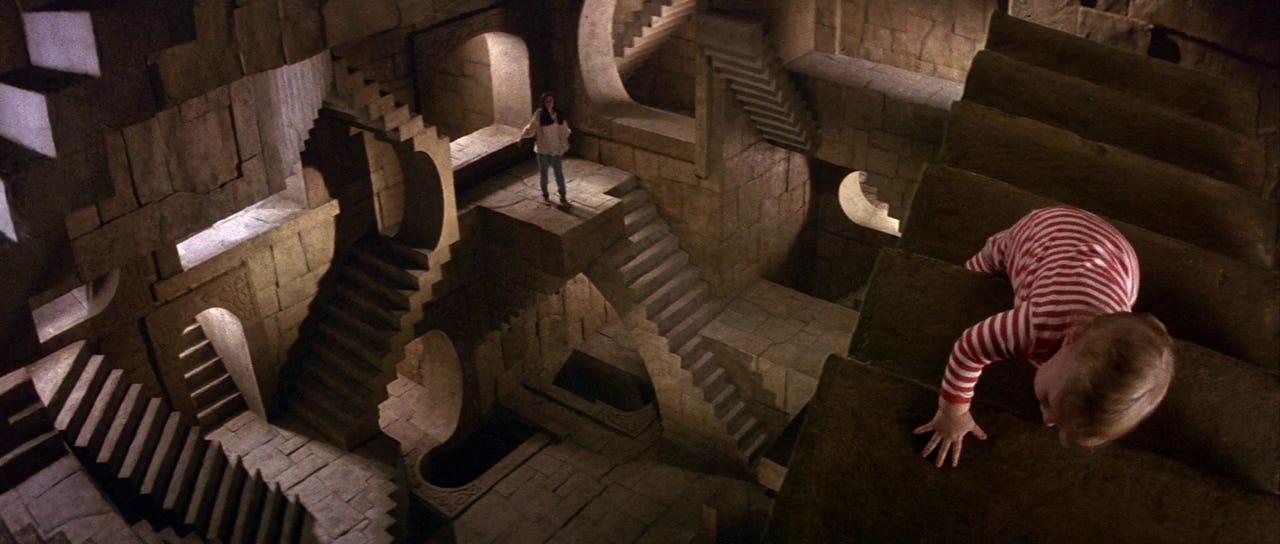
No matter how much money is thrown at the screen in modern frenetic computer-animated extravaganzas, they seldom have the tactile sense that they can be reached out and touched. That’s not the case in the resolutely analogue Labyrinth. Everything from Elliot Scott’s production design to the puppetry, characters in monster suits, matte paintings, forced perspective, and clever camera angles (especially in a set featuring Escher-esque designs) adds up to a visual effects bonanza that feels genuinely special. All right, it isn’t flawless. The joins are visible during some of the chroma key shots. But this has a handmade charm that few modern fantasies can match.
